
Jom Main Jom Sihat! : How Our Sports Day Boosted Growth for Special Heroes

Does Running Help with More Than Just Fitness?
YES.
When children participate in running and track activities, they aren't just moving their legs. They are practicing Motor Planning—the ability of the brain to tell the body how to move through space.
The Benefit: Running helps improve "proprioception" (knowing where your body is). This leads to better balance and less "clumsiness" in daily life.
The Growth: Research shows that aerobic exercise like running increases the production of BDNF (Brain-Derived Neurotrophic Factor), a protein that supports learning and memory (Hillman et al., 2008).
Can Water Activities Reduce Sensory Meltdowns?
YES!
Water play is one of the most effective ways to provide heavy work and sensory regulation. The pressure of water against the skin provides calming "deep pressure" input.
The Benefit: For children who feel overwhelmed by noise or touch, the hydrostatic pressure of water acts like a "warm hug," helping their nervous system reset.
The Growth: Engaging in aquatic activities has been proven to decrease stereotypical repetitive behaviors and improve social interactions in children with Autism (Pan, 2010).
Does Basketball Build Social Brains?
YES.
Basketball requires more than just shooting; it requires joint attention. To play, a child must look at the hoop, look at the ball, and look at their teammate.
The Benefit: It teaches "Turn-Taking" and "Executive Functioning" (planning the next move).
The Growth: Team sports help children practice "Social Reciprocity"—the back-and-forth flow of social interaction that many SEN children find challenging.
Movement is the starting point for learning. If the body is steady, the mind can be ready.
What can parents do to keep the "Sporty Growth" going at home?
You don't need a stadium to help your child grow. Use these simple "Sporty Scripts" at home:
Animal Walks: "Let's hop like frogs to the bathroom!" (Builds core strength).
The Water Bucket: "Can you carry this heavy water to the plants?" (Provides calming sensory input).
The Balloon Toss: "Keep the balloon up!" (Improves hand-eye coordination).
Why does HI 5 SEN prioritize these events?
We follow a Holistic Development Model. We know that behavior and speech don't happen in a vacuum—they are built on a foundation of physical regulation.
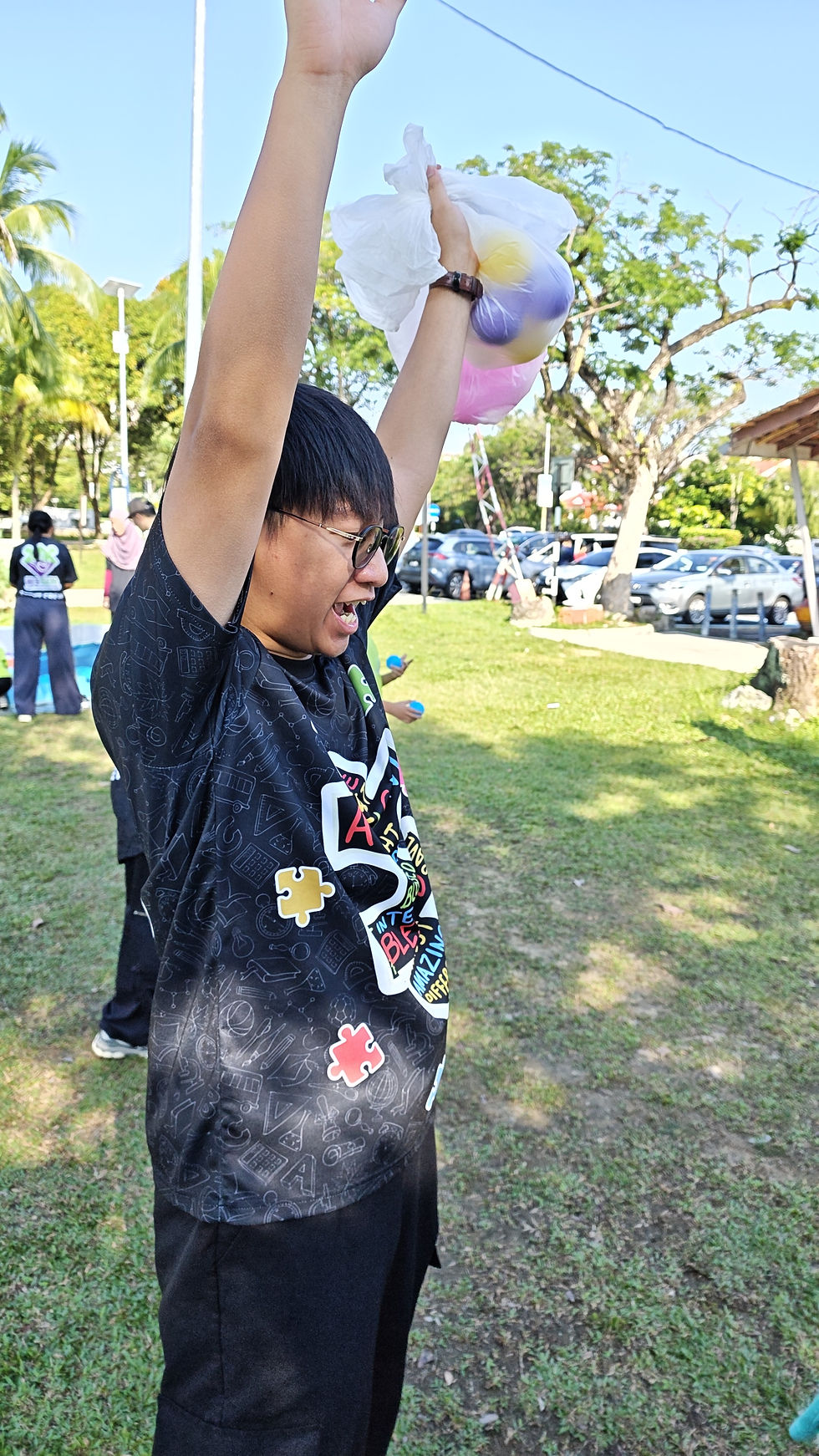
Our Sports Day provided:
Sensory Integration: Real-world practice for loud noises and different textures.
Social Inclusion: A safe space to fail, try again, and cheer for friends.
Confidence Boosters: The "I did it!" moment when a ball hits the rim or a race is finished.
References Used for These Points:
Hillman, C. H., et al. (2008). Be smart, exercise your heart: exercise effects on brain and cognition. Nature Reviews Neuroscience. (Explains how running/aerobics boost brain growth).
Pan, C. Y. (2010). Effects of water exercise swimming program on aquatic skills and social behaviors in children with autism spectrum disorders. Autism. (Confirms water activities reduce repetitive behaviors).
Memari, A. H., et al. (2015). Children with Autism Spectrum Disorder and Patterns of Physical Activity. (Discusses the link between team sports and social reciprocity).


Comments